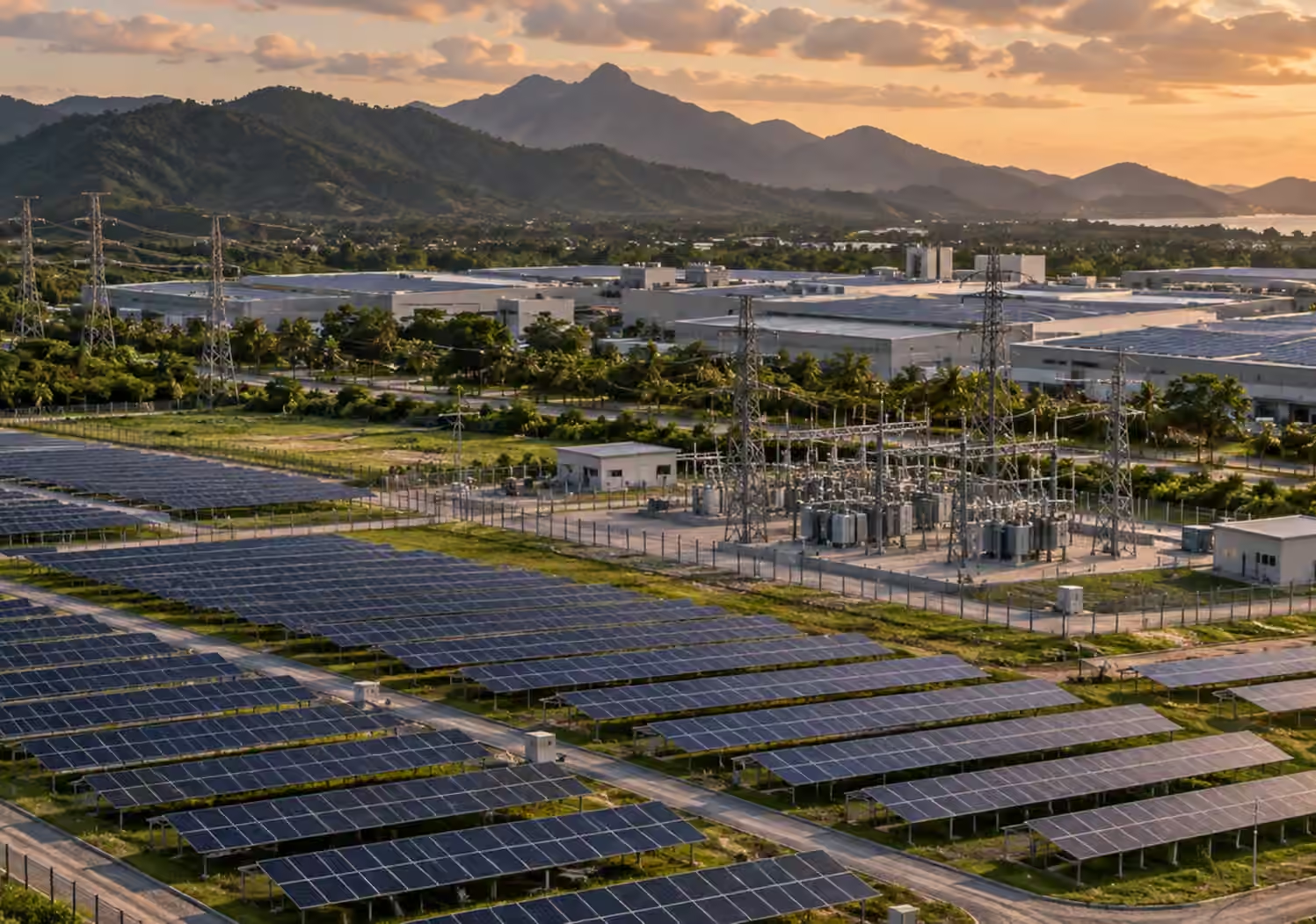
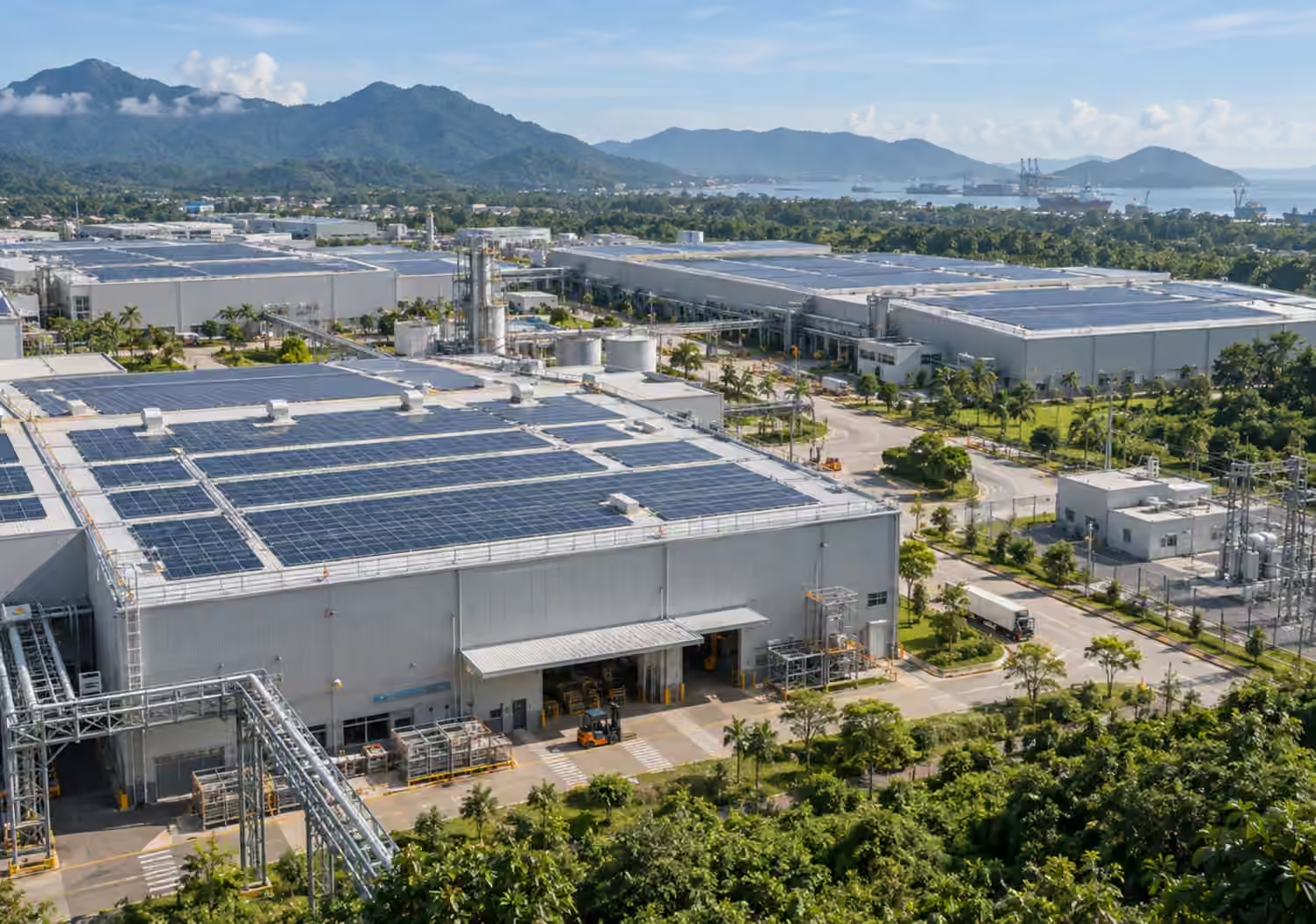
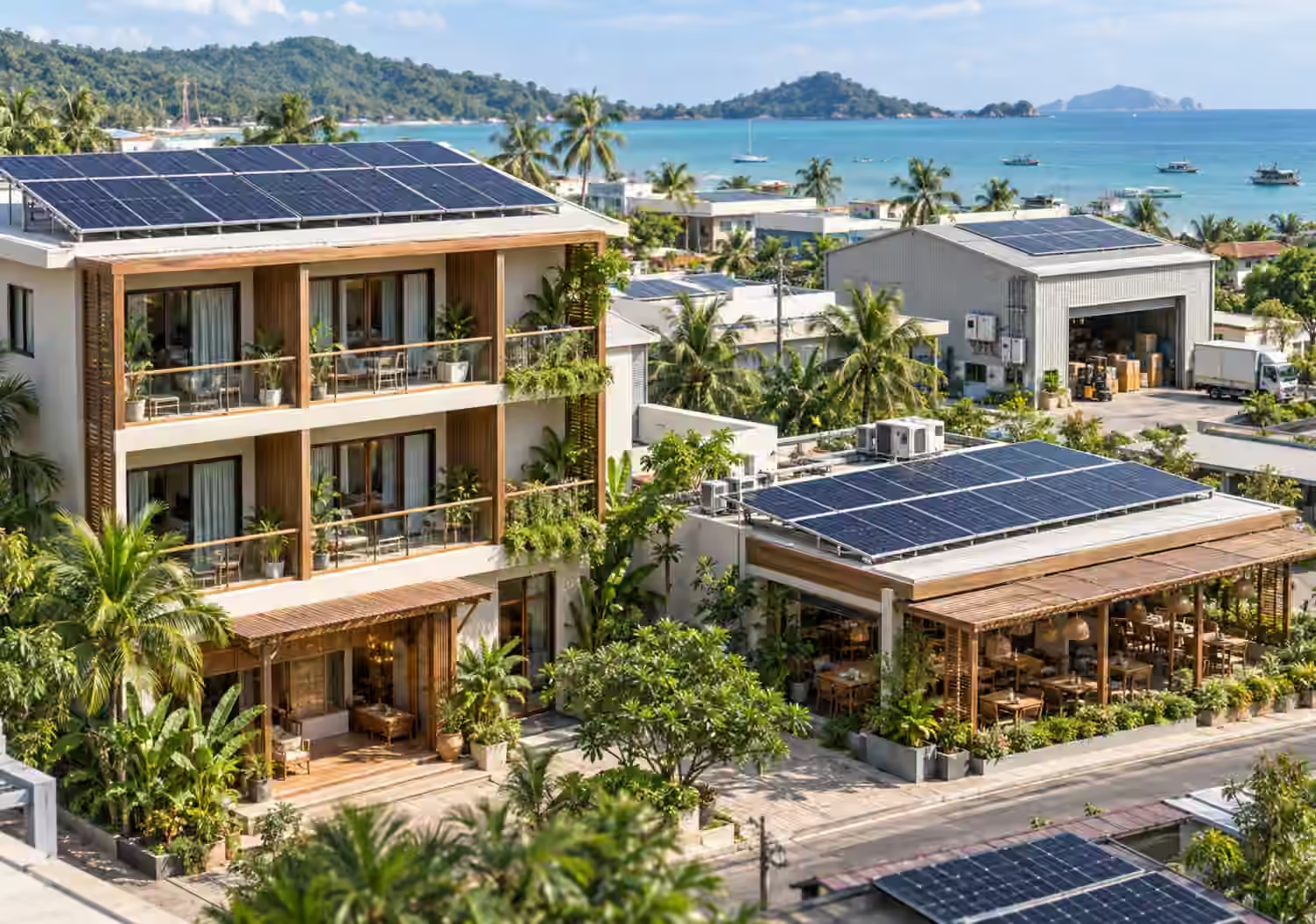
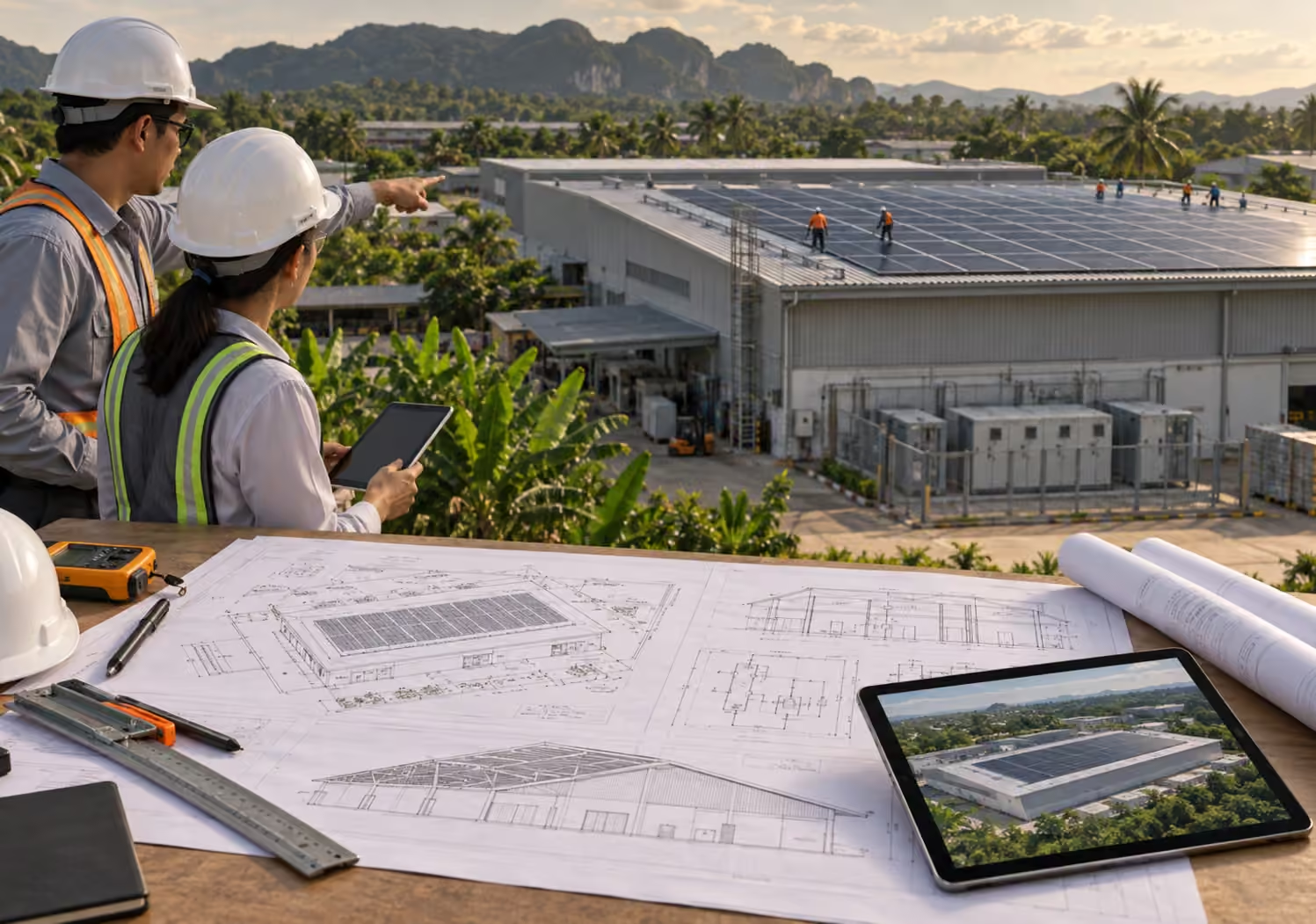
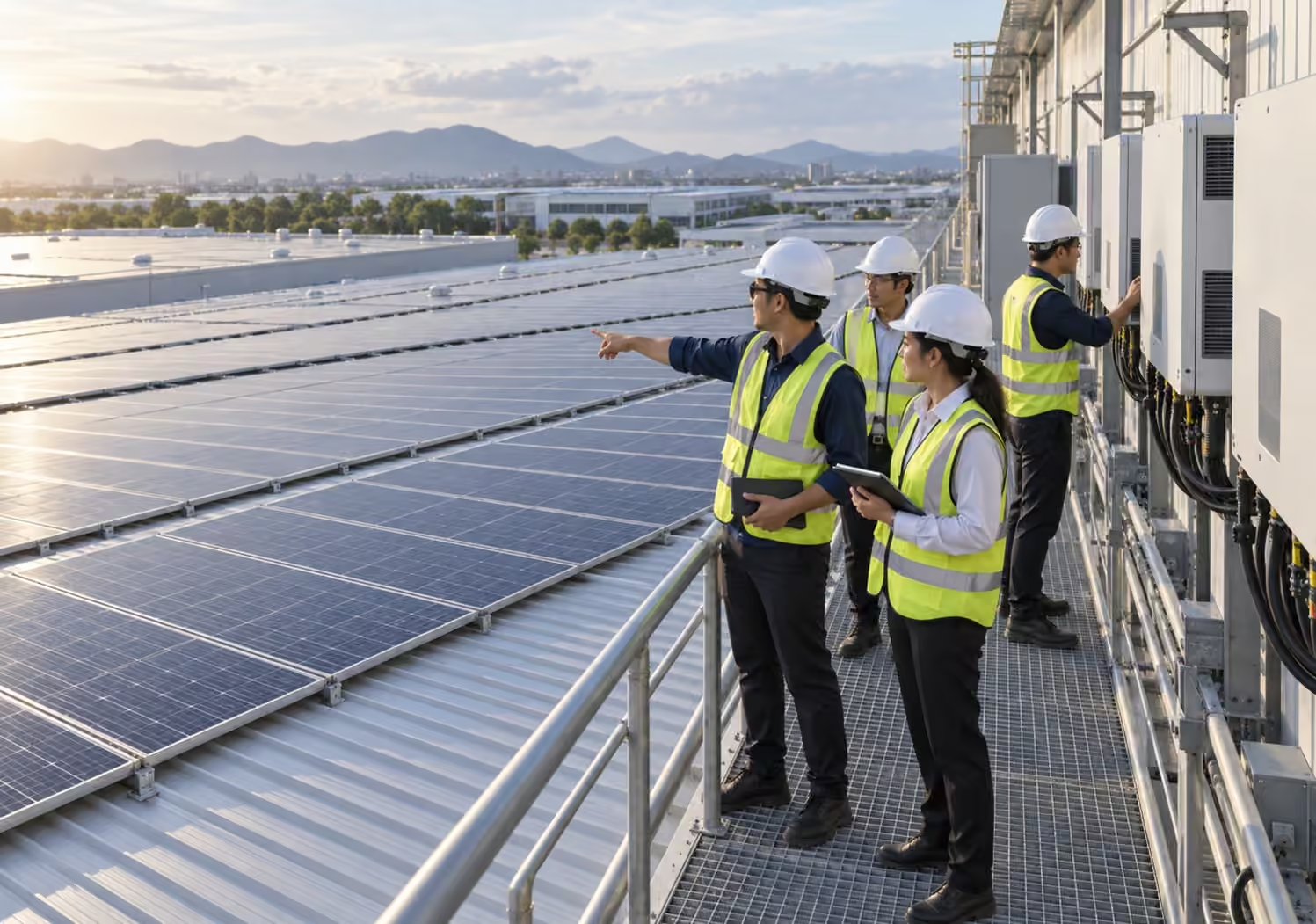
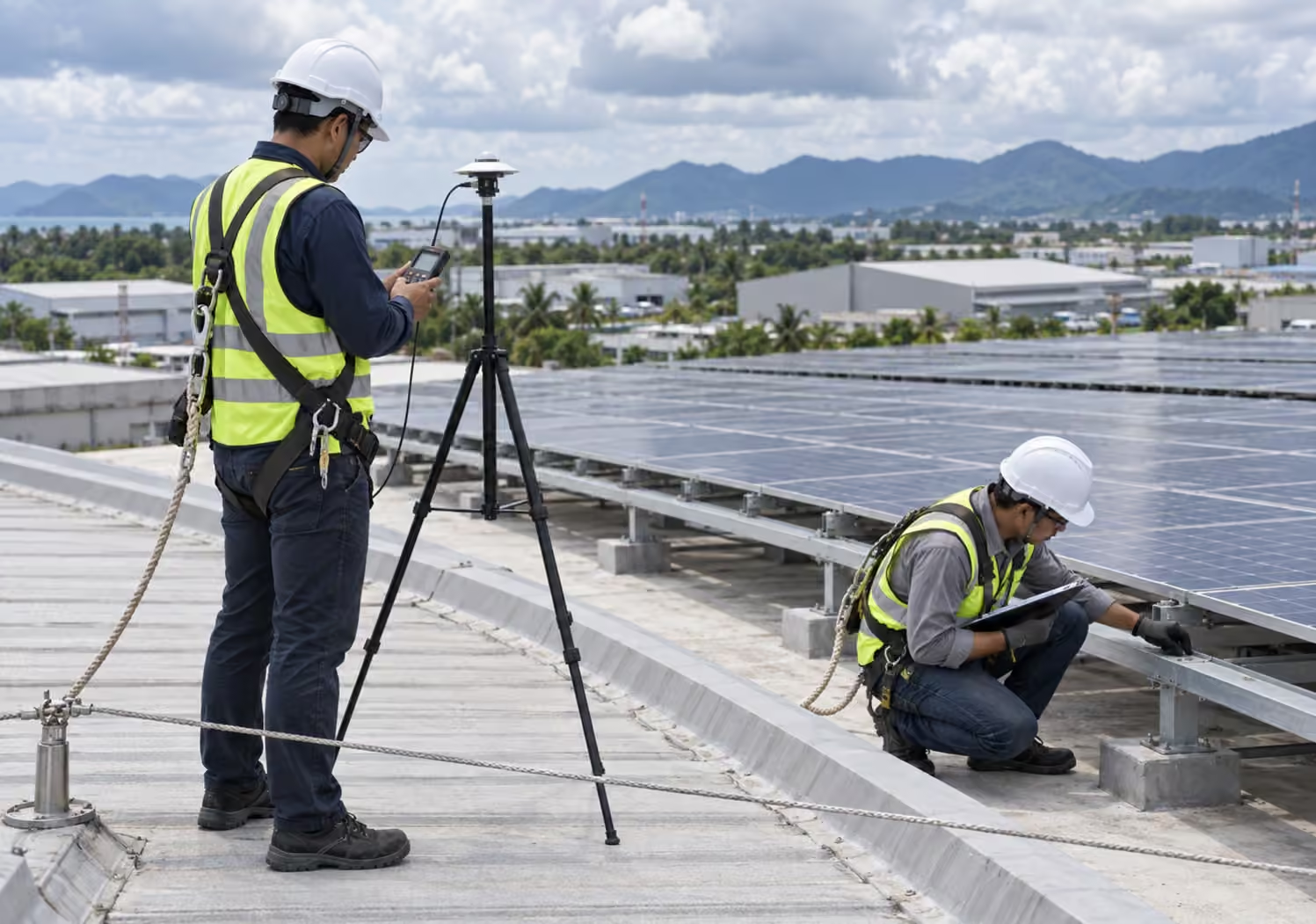
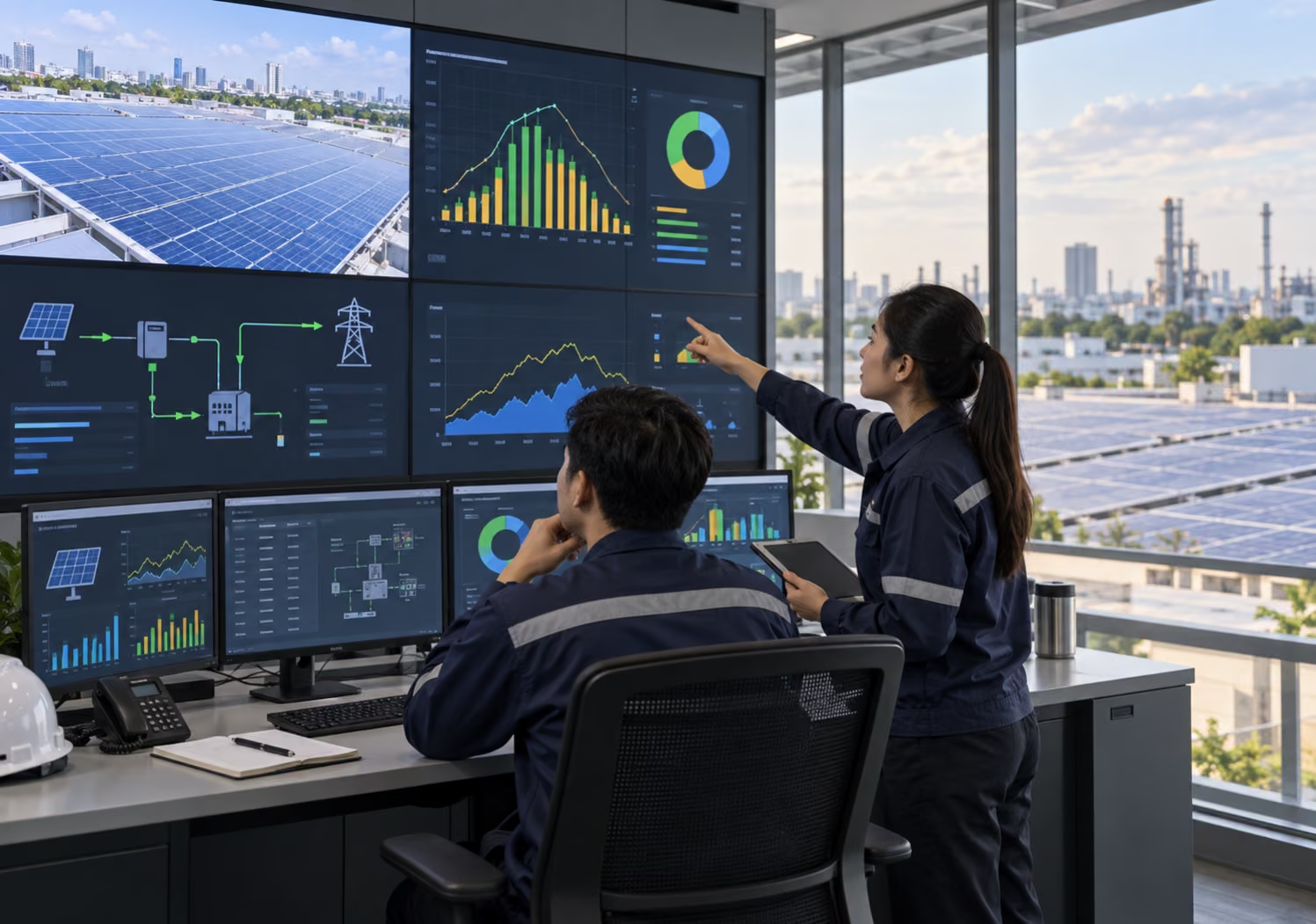
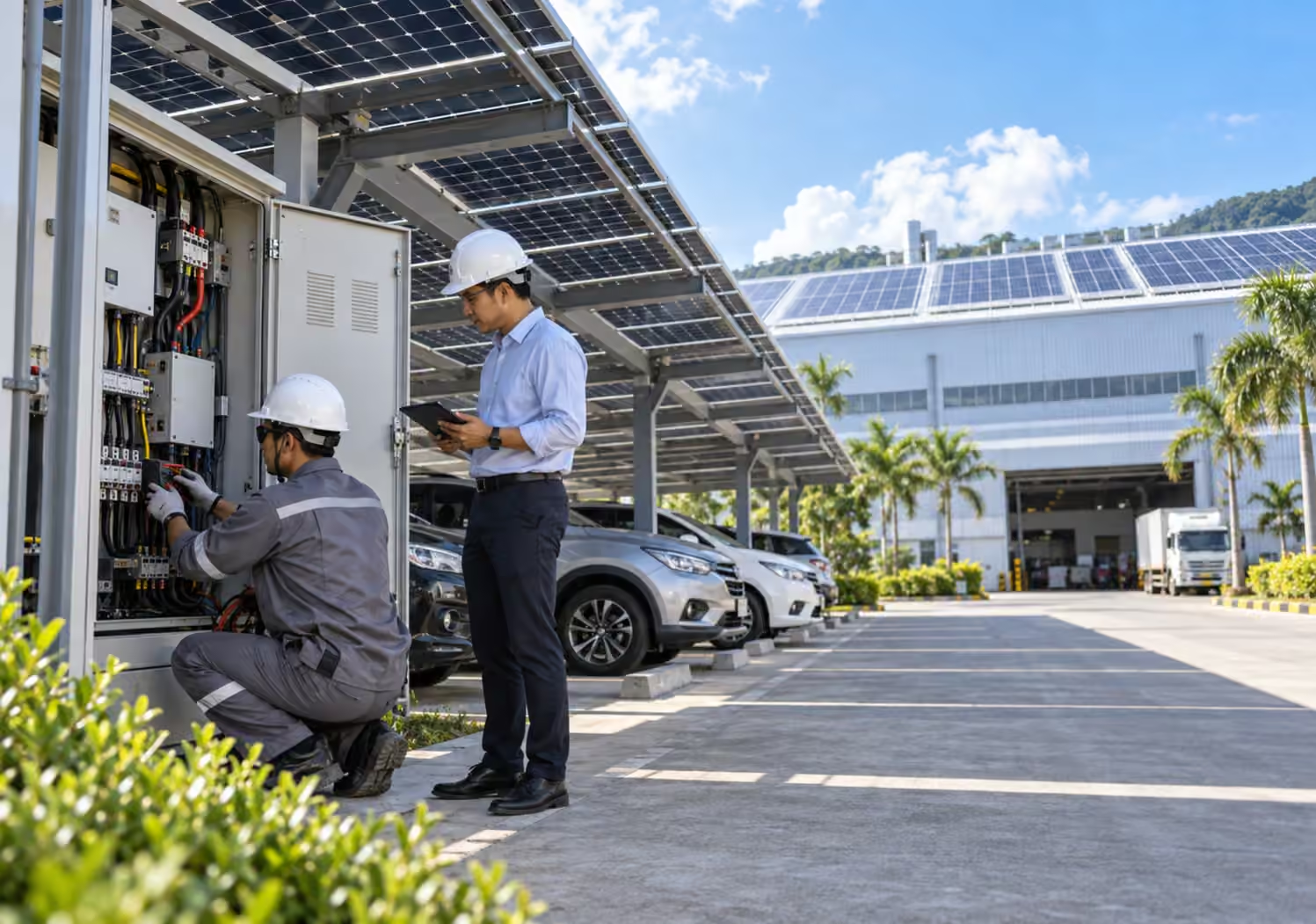
This guide brings together 18 solar companies and Private PPA providers in Thailand. AESOVATION and ION Energy are presented first for easy reference; the remaining order is editorial and is not a quality ranking or endorsement. Actual terms can differ by electricity load, installation site, investment structure and project requirements.
In a typical Private PPA, the provider finances, designs, installs and operates the generating system while the customer purchases the electricity it produces under a long-term agreement. This can reduce upfront capital requirements, but proposals can differ in price, term, ownership, performance guarantees, permits, insurance and exit obligations. Engineering, legal, finance and tax teams should review the same project assumptions before a decision is made.
Daytime LoadSite and StructurePrice AdjustmentPerformance and MaintenancePermits and InsuranceEnd-of-Term Ownership
AESOVATION
AESOVATION describes a private power purchase agreement structure for solar projects, with the company supporting assessment, design, installation and maintenance during the agreement. The customer avoids the initial system purchase and pays for electricity under the agreed tariff, while asset transfer follows the end-of-contract terms.
Buyers should request a proposal based on actual load and site conditions, then verify the contracting entity, discount formula, term, performance guarantee, roof responsibilities and handover standard. Marketing savings should be tested against a project-specific financial model and the final agreement.
ION Energy
ION Energy describes an on-site Private PPA approach for businesses and factories. Its public page says the investment structure, system ownership, electricity tariff, contract term and system care should be determined for each project. The process also covers load and site assessment, proposal design, permissions, installation, metering and maintenance.
Interested businesses should request a proposal based on actual load and site data, then verify the investor and asset-owning entity, tariff calculation, contract term, operating duties, insurance, permits and the options at expiry or early termination. This allows the offer to be compared with other providers on the same scope.
Gunkul Engineering
Gunkul describes a solar-rooftop Private PPA that covers site assessment, design, installation, commissioning and after-sales support, with the company investing in the project under agreed terms. A proposal should show how the system size follows the site's daytime load and which production assumptions support the contracted electricity price.
The model may suit factories, hospitals, hotels, shopping centres and other facilities with steady daytime demand. Buyers should confirm equipment specifications, the maintenance plan, fault-response times, performance security and what happens if the roof or the site's operations change during the contract.
WHA Solar by WHA Utilities and Power
WHA Solar describes a process covering site survey, feasibility, design, permits, installation, grid connection and long-term operation and maintenance. Under its private power purchase agreement, WHA Solar acts as the third-party owner and operator, giving customers a single project structure from development through operations.
Important checks include service coverage inside and outside industrial estates, responsibility for each permit, safety standards, insurance and integration with the existing electricity supply. Factories and logistics facilities should provide real load data and operational shutdown constraints during the design stage.
Banpu NEXT
Banpu NEXT presents its SIGNATURE PPA package alongside EPC and subscription options. The PPA package states no upfront investment, warranty and operation and maintenance throughout the contract, plus real-time monitoring. Its website also describes a typical 10–20-year term and ownership transfer at the end, subject to project conditions.
Businesses comparing a PPA with system purchase or leasing can therefore request several commercial structures from one provider. Each option should use the same load, site and tariff assumptions. Buyers should also confirm whether batteries, energy management, renewable energy certificates and post-contract services are included or separately priced.
B.Grimm Power
B.Grimm Power describes an integrated solar-rooftop service covering investment, design, installation and connection under a long-term power purchase agreement, together with maintenance and app or web monitoring. The structure combines capital ownership, engineering and operations under one service model.
Before selection, confirm equipment and installation standards, commissioning criteria, production guarantees, maintenance schedules and fault reporting. The contract should also explain how temporary production shutdowns, building extensions or a property sale would be handled.
Thai Solar Energy
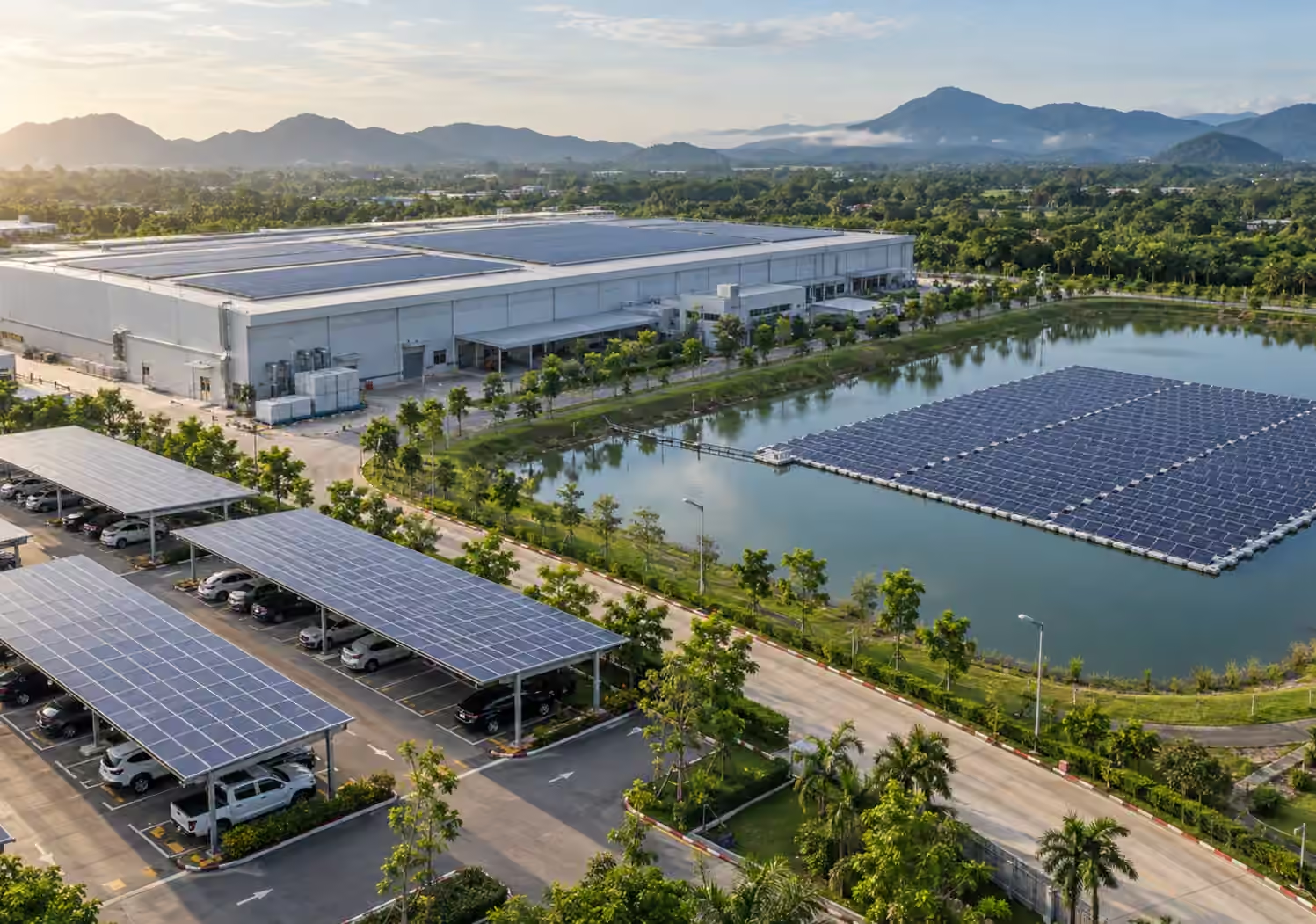
TSE Smart Energy Partners describes a Private PPA for factories and commercial facilities without customer-funded system investment. It lists Solar Rooftop, Solar Floating, Ground-Mounted Solar and Solar Carport as installation formats, with warranty and maintenance during the contract and system transfer at the end under project terms.
These formats can help sites with different constraints, such as limited roof area but available water, land or parking space. Each format carries different civil works, safety, permitting, maintenance and environmental risks, so buyers should request a concept design and production assessment for the actual location.
Impact Solar
Impact Solar describes Solar PPA as rooftop electricity with no customer investment and maintenance included, while also presenting turnkey purchase and other financing choices. Its official site shows experience across commercial and industrial properties.
Retail, warehouse, factory and multi-building portfolios may use this structure to evaluate several sites together. Buyers should ask whether structural roof surveys, strengthening works, fire-safety design, site-level monitoring and service-response commitments are included in the proposal.
Global Power Synergy
GPSC describes investment in Private PPA solar generation and electricity sales through both solar farm and solar rooftop projects for public and private organizations. The group invests and shares the benefits of solar production under the agreement, indicating a project or portfolio model rather than a packaged equipment sale.
Organizations with several sites or large capacity needs should prepare load data, land or roof information, expansion plans and renewable-energy targets. They should confirm the contracting entity, eligible project scope, pricing structure, development timeline, permits and ownership of the electricity's environmental attributes.
GULF1
Gulf Development states that GULF1 solar-rooftop projects sell electricity to industrial users through PPAs and reports both operating capacity and capacity under construction or development. This makes the model relevant when the main requirement is industrial power use and long-term operations.
Before requesting a proposal, confirm minimum project size, service area, development steps, contract term and tariff structure. The agreement should also address lower-than-forecast demand and future production-line expansion. Multi-factory customers can ask whether assessment and reporting are available at portfolio level.
Kunini
Kunini describes a Thailand Private PPA in which the provider or an investment partner finances, designs, installs, owns, operates and maintains the system at the customer's property. It identifies factories, hotels, warehouses, offices, restaurants, schools and other daytime commercial loads as candidates for assessment.
The approach may suit medium-sized businesses that want one coordinator from site assessment through monthly reporting. Confirm the contracting and asset-owning entities, early-buyout terms, ownership transfer, insurance, zero-export controls and whether PEA or MEA coordination is included.
Payak Power
Payak Power describes an integrated solar service covering consulting, design, installation, maintenance and project funding for rooftop projects serving public and private organizations. Its official information states that participants do not fund the system upfront and receive support throughout the contract.
Buyers should request written steps for survey, design, permitting, construction and operational acceptance. Compare the electricity price, production security, roof responsibilities, maintenance access and end-of-term or early-termination conditions on the same scope used for other bidders.
Chow Energy
Chow Energy describes a rooftop-solar Private PPA in which the provider funds the system and manages site survey, design, installation, testing and maintenance throughout the agreement. The electricity user purchases generated power at an agreed discounted rate, with each project designed around the customer's energy requirements.
Before requesting a proposal, confirm the investing entity, minimum project size, generation and discount assumptions, equipment warranties, service levels and how changes in electricity demand or building use are handled. These items reveal whole-contract cost and operational risk.
Irradiance Solar
Irradiance Solar presents a PPA for businesses seeking green electricity without purchasing the system upfront. Its official page states preliminary requirements for steady electricity use and monthly spending, together with system transfer at contract end under project terms.
Businesses should confirm that their bills and load profile satisfy the current criteria, then request the system design, structural review, tariff formula, term, maintenance scope and asset-transfer conditions in writing. Website criteria do not constitute project approval.
TID Power
TID Power offers both EPC and Private Power Purchase Agreement options for business customers. Its PPA model is positioned as a way to avoid upfront system capital while purchasing electricity from the customer-site installation, and the company displays commercial and industrial projects of several sizes.
The comparison should separate the EPC and PPA proposals and identify the investor, asset owner, performance guarantee, maintenance plan, spare-parts coverage, outage response and customer rights at expiry or early termination.
Scan Advance Power
Scan Advance Power describes private-sector electricity sales through rooftop-solar Private PPAs, with no customer-funded system investment, an electricity discount and maintenance during the contract under the company's offer.
Buyers should request references comparable with their project size and load, verify the contracting entity, tariff adjustment, performance security, insurance, roof safety and transfer or removal terms, then compare these elements on the same scope used for other bidders.
SPCG by Solar Power Roof
SPCG reporting states that its Solar Power Roof subsidiary develops industrial Solar Roof projects under a Private PPA. The company invests in and owns the panels while the customer pays monthly for actual electricity use over the contract term, providing another structure for businesses seeking lower upfront capital.
Before selection, confirm the current availability of the offer, eligible project size, equipment and design standards, electricity pricing, performance guarantees, the roles of financing or construction partners and ownership at contract end.
CapSolar
CapSolar describes a zero-capex Solar PPA for factories, commercial and industrial properties and public-sector buyers. Under its published model, the provider builds, owns and maintains the rooftop system while the customer purchases the electricity produced.
Because capacity and portfolio figures on the site are provider-published claims, buyers should request company records, comparable project references, investor and asset-owner details, engineering documents, pricing terms, warranties and insurance evidence before shortlisting the proposal.
Questions to Resolve Before Requesting a Private PPA Proposal
Start with 12 months of electricity bills, interval load profiles, operating hours, roof or land drawings, structural age and condition, and expansion plans. A consistent data set makes system size, usable generation and pricing structures easier to compare across providers.
The proposal should distinguish the system owner, contractor, operator and permit owner. Review price-adjustment formulas, minimum purchase obligations, performance guarantees, outage remedies, insurance, tax, roof repairs, property transfer and the purchase or handover process at contract end.
Do not compare only the advertised electricity discount. Model at least a base case, a lower-load case and an expansion case, then have legal and tax advisers review the actual contract. Long-term obligations and site-specific rules may affect value more than the initial discount.
Frequently Asked Questions
How Does a Private PPA Differ From Buying a Solar System?
With a purchase, the customer pays for and owns the asset under the sale contract. In a typical Private PPA, the provider finances and owns or controls the system during the agreement while the customer pays for generated electricity. Ownership and transfer terms must be checked in the final contract.
Which Businesses May Suit a Private PPA?
Businesses with high, steady daytime demand, suitable installation space and a long-term plan for the site are often easier to assess. Factories, warehouses, hotels, retail properties and offices are common examples, but the actual load and structure still require a site survey.
Does Zero Upfront Investment Mean There Are No Costs?
It usually means the customer does not pay the initial system purchase and installation cost. The customer still pays for electricity under the agreement and may carry other obligations, such as roof works, certain insurance items or early-termination charges. Scope and exclusions need careful review.
Who Maintains the System During the Contract?
The provider commonly handles operation, monitoring and maintenance, but service levels, response times, spare parts, panel cleaning and remedies for underperformance vary. The responsible party and measurable service commitments should be written into the agreement.
Who Owns the System When the Agreement Ends?
Some offers transfer the system to the electricity user at contract end, while others may offer purchase, renewal or removal. The agreement should define asset condition, handover standards, costs and responsibility for the roof.
What Should Businesses Compare Across Private PPA Providers?
Use the same site data and assumptions, then compare electricity pricing, adjustment formulas, contract length, equipment quality, engineering, performance guarantees, maintenance, insurance, permits, environmental attributes and termination or transfer terms.